


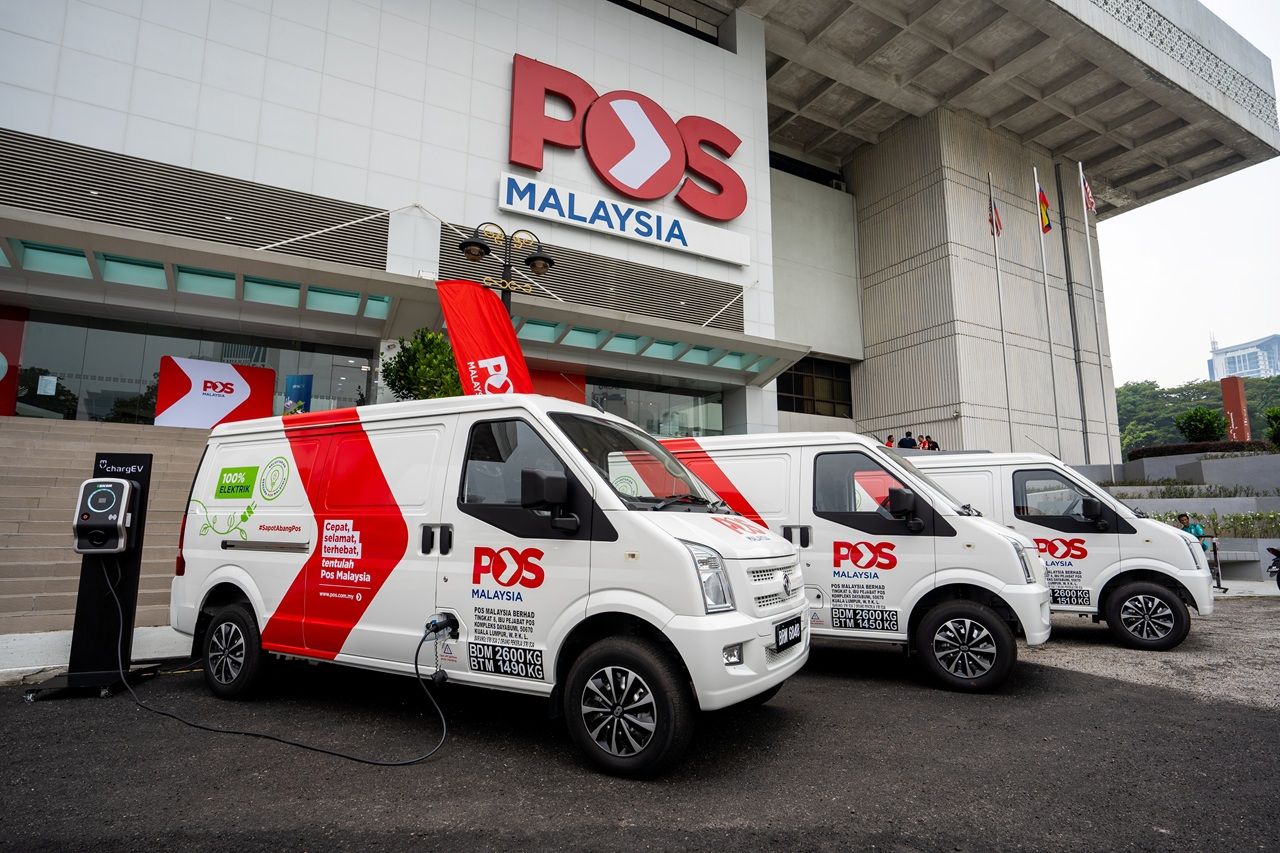


A Sustainability Impact Case Study developed with the United Nations Global Compact Network Malaysia, Brunei and Cambodia (UNGCMBC) shows how Pos Malaysia is scaling electric vehicles, charging infrastructure, telematics and workforce readiness to advance lower-carbon first- and last-mile delivery nationwide.
Pos Malaysia’s Electric Fleet Transformation
Sustainable logistics in Malaysia is moving from ambition to everyday operations. Pos Malaysia, the national postal and logistics operator, now runs Malaysia’s largest electric vehicle (EV) logistics fleet across Peninsular Malaysia, Sabah and Sarawak. The fleet is helping the company decarbonise deliveries while maintaining the reliability and nationwide reach required of a national network.
The Sustainability Impact Case Study, developed with UNGCMBC, documents how Pos Malaysia connected electric vehicle deployment with emissions baselining, charging infrastructure, telematics, capital planning, governance and workforce readiness. This integrated approach offers a practical reference for logistics providers, businesses, policymakers and sustainability practitioners seeking credible pathways to lower-carbon delivery.
Why Fleet Electrification Matters for Sustainable Logistics
Transportation represents a significant part of operational emissions in the logistics sector. Pos Malaysia therefore incorporated fleet electrification into its Sustainability Roadmap and Net Zero 2050 pathway, treating the transition as an operational transformation rather than a vehicle replacement exercise.
The programme brings together vehicles, charging infrastructure, site readiness, data systems, people, financial planning and governance. By planning these elements together, Pos Malaysia can progressively scale electrification based on real-world delivery requirements and performance evidence.
Malaysia’s Largest EV Logistics Fleet: Key Facts
One in Three Parcels Delivered Using Electric Vehicles
Fleet electrification has moved beyond pilot scale and become part of Pos Malaysia’s daily delivery operations. Today, one in three parcels is delivered using an electric vehicle across the company’s nationwide network.
This progress supports Pos Malaysia’s ambition to achieve 100% green deliveries by 2030 and Net Zero by 2050. It also demonstrates how lower-carbon parcel delivery can be introduced at scale while preserving service reliability and accessibility.
Reducing Carbon Emissions Through Fleet Electrification
Since FY2023, Pos Malaysia’s electric fleet has travelled 28.8 million kilometres, equivalent to approximately 719 trips around the world. Over the same period, the transition has helped avoid approximately 3,881 tonnes of CO₂e emissions from conventional delivery vehicles.
The programme contributes to the United Nations Sustainable Development Goals, including SDG 13: Climate Action, SDG 11: Sustainable Cities and Communities, and SDG 9: Industry, Innovation and Infrastructure.
How Telematics Supports Smarter, Safer Deliveries
Electric vehicles are one part of Pos Malaysia’s wider logistics transformation. More than 2,200 e-Bikes, trucks and e-Vans are equipped with telematics technology to monitor vehicle movement and driving behaviour.
The data supports route efficiency, reduced idling, driver safety, fleet utilisation and more informed fleet management. It also gives Pos Malaysia greater visibility into operational performance as the electric fleet continues to scale.
Key Lessons for Logistics Decarbonisation
These lessons show that successful fleet electrification depends on coordinated decisions across technology, infrastructure, data, people and operations. The vehicle is important, but the system around it determines whether decarbonisation can be sustained at scale.
Read the Full Sustainability Impact Case Study
Download the full Pos Malaysia Sustainability Impact Case Study to discover the strategy, implementation and key lessons behind Pos Malaysia’s transition towards lower-carbon delivery.


Follow us on


Download our app

